
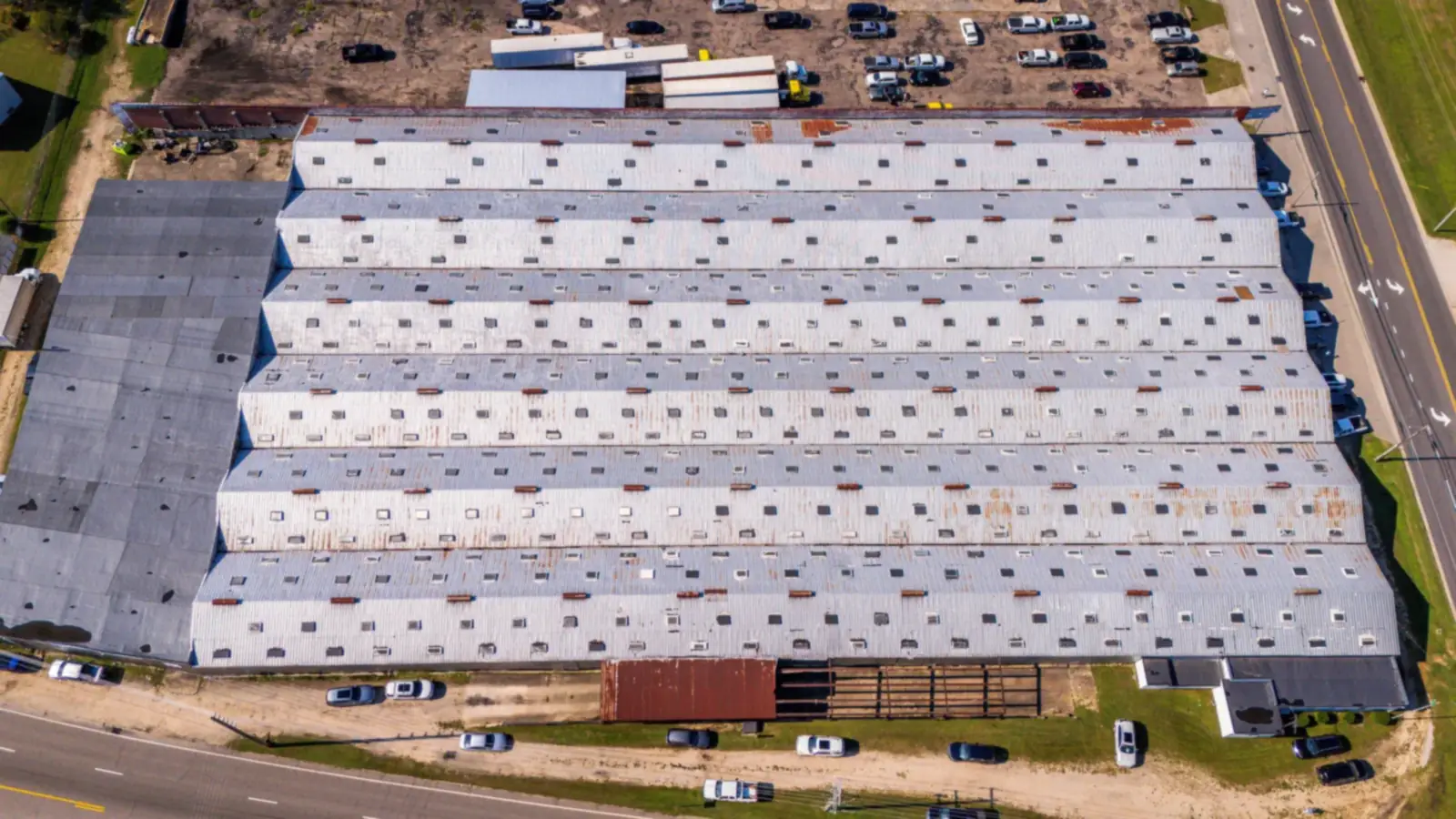
Commercial Roofing for Small Buildings
We re-roof small commercial buildings around Houston and Galveston County: strip centers, offices, churches, small warehouses and apartment buildings. Most of those roofs are low-slope membranes or metal, and the job starts the same way as a house: a measured roof, a look at the deck and the drainage, and a written scope before anything is torn off.
- Free on-site roof measurement
- Written estimate before tear-off
- Shingle, metal and low-slope roofs
- Homes and businesses
Which roof systems do small commercial buildings use?
Most small commercial buildings in our area have one of three roofs. A low-slope roof needs a continuous membrane because water drains slowly; a steeper metal roof sheds water like a house roof does. The system on your building now is not always the right one for the next twenty years, and the estimate is the time to compare.
| System | What it is | Where it fits |
|---|---|---|
| TPO single-ply | A white thermoplastic sheet with heat-welded seams | Low-slope offices, retail, apartments; reflects heat |
| Modified bitumen | Asphalt-based rolls in two or more plies | Low-slope roofs with foot traffic or many penetrations |
| Metal panels | Standing seam or screw-down steel | Warehouses, shops, canopies, steeper commercial roofs |
| Asphalt shingles | Same as residential | Steep-roofed apartments, churches, offices in converted homes |
For the metal options, our metal roofing page goes into standing seam versus exposed-fastener panels.
What do you check before quoting a commercial re-roof?
Moisture, drainage and the edges. A commercial roof can look intact from a ladder and still hold water in its insulation, so the survey goes beyond the surface.
- Layers and moisture. Small core cuts show how many roofs are already there and whether the insulation is wet.
- Deck condition. Rusted metal deck, soft wood deck or sagging between joists changes the scope.
- Drains and scuppers. Their size, location and condition, and where water sits after rain.
- Edges and walls. Coping, parapet flashing and edge metal, where wind starts peeling a roof.
- Penetrations. HVAC curbs, vents, conduit and skylights, each needing its own flashing detail.
Wind uplift is highest at the perimeter and corners of a flat roof. On buildings inside the coastal windstorm zones TDI maps for Galveston County and eastern Harris County, the attachment at the edges is where the windstorm code and the membrane maker's specs are strictest.
What commercial properties do we work on?
Small and mid-size buildings where an owner or manager wants one crew responsible for the roof.
Professional offices and medical or dental clinics
Strip retail centers and freestanding storefronts
Apartment buildings and small multi-family complexes
Churches, fellowship halls and private schools
Small warehouses, shops and equipment buildings
Canopies, covered walkways and low-slope additions
Is this the right company for your commercial project?
For roof replacements and new roofs on small commercial buildings, yes. Two related needs are handled elsewhere in our family of companies:
- A leak or a damaged section on a flat roof that still has life left is a repair. Our sister company Texas Precision Roofers handles flat roof repairs and roof inspections.
- Build-outs, additions and general commercial construction beyond the roof belong with a general contractor rather than a roofing company.
The roof replacement cost guide lists the factors that move a commercial estimate as well as a residential one, and storm-damaged commercial roofs follow the process on our storm and hail damage page.
Getting a commercial roofing estimate
Call or send the form with the building address and a contact who can give us roof access. We survey the roof, take cores where needed, and send a written scope with the recommended system, the drainage changes and the edge details. We work across the area, from office parks in Webster to buildings along the Ship Channel in Pasadena and La Porte.
Commercial roofing questions
What kinds of commercial roofs do you replace?
Low-slope roofs in TPO single-ply membrane and modified bitumen, and metal roofs on warehouses, shops and canopies, on buildings such as offices, small retail centers, churches, clinics and apartment buildings. If a building is larger or taller than the work we take on, we will tell you on the first call.
Can the business stay open during a re-roof?
Usually. We work in sections, keep the building dried in at the end of each day, and plan noisy tear-off and crane or lift deliveries around your hours where we can. Entrances get protected walkways, and we agree on staging and dumpster locations with you before the job starts.
Should we re-cover or tear off the old commercial roof?
A re-cover over the existing roof can work when there is only one existing layer, the deck is dry and sound, and the insulation below is not saturated. Wet insulation trapped under a new membrane causes trouble fast. We check for moisture before recommending either path and write down why we chose it.
Why does water pond on our flat roof?
Usually because the roof never had enough slope to its drains, the deck has sagged, or a drain or scupper is partly blocked. A re-roof is the time to fix it with tapered insulation that builds slope toward the drains, crickets behind units and walls, and larger or added scuppers. Ongoing ponding shortens the life of any membrane.
Do you handle apartment and multi-family roofs?
Yes, both steep-slope shingle roofs on garden-style apartment buildings and low-slope roofs on flat-topped buildings. Occupied buildings need notice to tenants, protected entries and a schedule that keeps every unit dried in each night, and we plan those details into the estimate.
What information do you need to estimate a commercial roof?
Access to the roof and the building, roof plans if you have them, the age of the current roof and any leak history, and whether there are rooftop units or equipment to work around. We measure the roof ourselves, take core samples where needed to see what is under the membrane, and photograph drains, edges and penetrations.
Get the new roof planned before the old one comes off
We measure every slope, check the decking and the attic ventilation, and write the estimate before a single shingle is torn off.
Ready to find out what a new roof will take?
The roof measurement is free. We check the decking, count the layers, measure every slope and write the material, underlayment and flashing line by line.